

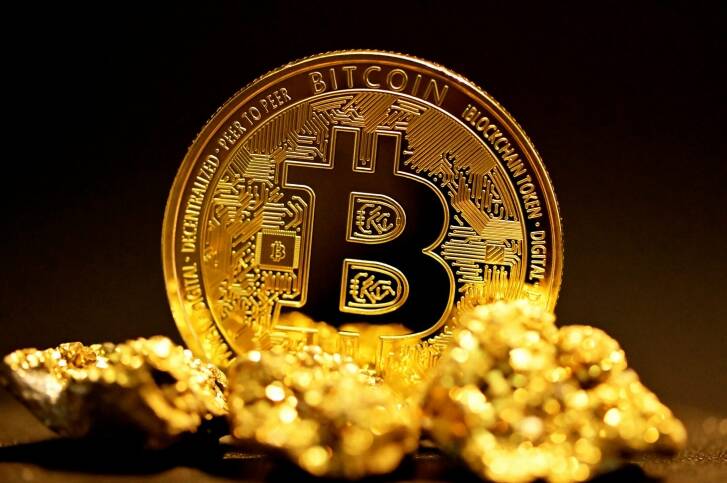
Amid such uncertain times, Bitcoin and gold are at the forefront of debates about how value is stored, preserved, and transferred. Gold, a cornerstone of wealth for centuries, is being challenged by Bitcoin, the world’s first decentralized digital currency. Both hold unique places in today’s shifting landscape, prompting questions about which will dominate in a world reshaping itself around technology and geopolitics.
Gold’s history stretches back thousands of years. Ancient societies prized it for its rarity and durability, using it in everything from jewelry to coins. In modern times, gold became a foundation for monetary systems, with nations adopting the gold standard to stabilize their currencies. Even after the U.S. severed the dollar’s link to gold in 1971, it remained a reliable hedge against inflation and economic turmoil.
Bitcoin, created in 2009 by an anonymous figure known as Satoshi Nakamoto, emerged as a reaction to the financial crises of the time. It offered a way to transfer value without reliance on traditional banking systems, using blockchain technology to ensure secure and transparent transactions. Bitcoin’s fixed supply of 21 million coins introduced digital scarcity, drawing comparisons to gold as a store of value.
Bitcoin, the “apex property of the human race” or “rat poison”
Both assets share the quality of being limited. Gold’s scarcity stems from its natural rarity and the labor-intensive process of mining. Bitcoin’s supply is predetermined by its code, with new coins introduced at a decreasing rate until the total reaches its 21-million limit. Gold is tangible and has a physical presence, making it a tangible asset you can hold. Bitcoin exists purely as data, accessible via digital wallets and reliant on electricity and the internet. This distinction impacts their appeal, with gold offering a sense of security through physical possession, while Bitcoin appeals to those seeking a decentralized, borderless option.
Bitcoin’s divisibility and ease of transfer make it an excellent medium for quick, international payments. A single Bitcoin can be divided into 100 million smaller units called satoshis, facilitating even the smallest transactions. Gold, by contrast, is cumbersome to divide or move, making it less practical in everyday commerce. Bitcoin’s price history is marked by wild swings, often driven by speculation, regulatory news, and macroeconomic trends. Gold, in contrast, has demonstrated relative stability over the years, particularly during economic downturns when it acts as a safe haven for investors.
Michael Saylor and Peter Schiff, for example, represent polar extremes in the debate between Bitcoin and gold. Saylor, the executive chairman of MicroStrategy, is one of Bitcoin’s loudest champions, firmly believing it is a superior alternative to gold. He often refers to Bitcoin as “digital gold,” pointing to its fixed supply, portability, and ability to function without borders or central control. In his view, Bitcoin is the ultimate store of value for the modern age, a tool to safeguard wealth in a world increasingly shaped by technology and digital networks. Saylor has gone so far as to call Bitcoin “the apex property of the human race.”
On the other side, Peter Schiff is one of Bitcoin’s fiercest critics and an unwavering advocate for gold. He dismisses Bitcoin as speculative and warns of its volatility and reliance on technology, which he views as liabilities. Schiff has consistently argued that Bitcoin has no intrinsic value, unlike gold, which he describes as a physical, time-tested store of wealth. “Gold has intrinsic value; Bitcoin does not,” he often states, emphasizing the metal’s durability, historical stability, and universal acceptance. Schiff views Bitcoin’s rise as a speculative bubble fueled by hype, while gold remains, in his eyes, the only reliable safeguard against economic uncertainty.
Notably, renowned investor Warren Buffett, a skeptic about Bitcoin’s intrinsic value, referred to it as “probably rat poison squared” as he noted that investing in productive assets that generate earnings is the way to go. Although Michael Saylor is one of the wildest proponents of Bitcoin, he might have involuntarily admitted the lack of intrinsic value when he once said Bitcoin could either go to $1 million or zero dollars.
Bitcoin and Gold in a New World Order
Gold and Bitcoin are at the heart of discussions about how nations and individuals will preserve wealth in a changing world. Gold has long been a symbol of stability, a physical asset that has weathered centuries of economic and political upheaval. Central banks continue to hoard it, and during times of uncertainty, investors flock to gold as a safe haven. Its physical presence offers a sense of security, and its historical role in trade and monetary systems makes it a trusted hedge against inflation and currency devaluation.
Bitcoin, by contrast, is shaping a new narrative for the digital age. Its decentralized nature and limited supply make it an attractive alternative to traditional financial systems. In a world where governments are exploring new forms of currency control, Bitcoin offers an option that operates outside these constraints. With a supply cap of 21 million coins, Bitcoin is immune to inflationary pressures caused by monetary policy, making it particularly appealing at a time when fiat currencies face growing scrutiny.
The emerging world order also brings geopolitical factors into play, further complicating the debate between Gold and Bitcoin. China, despite its official ban on Bitcoin mining, still controls over half of the network’s hashrate, raising questions about Bitcoin’s decentralization and the influence of major players. Meanwhile, in the United States, the incoming administration under President Trump has reportedly expressed interest in Bitcoin as a reserve asset, a shift that could redefine how nations manage their wealth. Reports indicate that both President Trump and incoming Secretary of Defense Pete Hegseth are Bitcoin holders.
The debate is unlikely to end anytime soon. But as governments, institutions, and individuals reconsider their strategies, these two assets will continue to play critical roles in the evolving narrative of wealth and power.
Industry experts share their thoughts on Bitcoin and Gold
To broaden the perspective on Bitcoin and Gold, FinanceFeeds spoke with executives from Equiti Group, Veax Labs, Guardian Stockbrokers, and HANetf. Their insights reveal a nuanced understanding of the debate, emphasizing Bitcoin’s unique role as an emerging digital asset while acknowledging gold’s enduring legacy:
- Michael Stark of Exness provided an in-depth market analysis of both Gold and Bitcoin in the context of today’s geopolitical turbulence.
- Ahmad Azzam of Equiti Group highlighted Bitcoin’s historical price cycles and its potential for exponential growth post-halving while pointing out the stark differences in how Bitcoin and gold function as financial assets.
- Iain Rogers of Veax Labs emphasized Bitcoin’s evolution as a digital reserve asset that caters to a tech-savvy generation, suggesting it creates a new category rather than replacing gold.
- Peter Manfield of Guardian Stockbrokers discussed the complementary nature of the two, with Bitcoin offering growth potential and innovation, while gold remains a symbol of stability.
- Hector McNeil of HANetf explored the growing accessibility of Bitcoin through ETFs and its role in portfolio diversification while cautioning against seeing it as a replacement for gold. Together, these perspectives highlight the dynamic interplay between tradition and technology in today’s investment landscape.
Below, you can find the experts’ insights in full, offering a closer look at their perspectives on Bitcoin and Gold.
Michael Stark, Financial Content Leader at Exness
 “Various instruments have weakened amid the strength of the US dollar after the latest dotplot indicated only two cuts by the Fed next year. Gold usually loses value as monetary policy is seen less dovish, but in this case it’s questionable whether a new long-term downtrend will develop. The price has been reluctant to move below $2,600 while the volume of buying hasn’t declined significantly. Traders are likely to continue to focus on political and geopolitical issues in the near future as turbulence remains high in the Middle East and Donald Trump’s inauguration approaches.
“The unsuccessful test of the 100% weekly Fibonacci extension slightly below $108,000 combined with the Fed’s declining dovishness prompted a sharp retracement. This is a normal situation for a cryptocurrency because volatility is higher than for gold most of the time and sentiment can usually shift more strongly. A continuing movement below $90,000 is questionable for now but traders are monitoring sentiment and flows to and from exchanges,” the Exness analyst added.
Iain Rogers, Chief Growth Officer at Veax Labs
 “Bitcoin vs Gold isn’t really a fair comparison. Gold has a history stretching back millennia, while Bitcoin is just over a decade old. The difference? Gold is static, while Bitcoin evolves—offering a digital, borderless alternative to store and transfer value.
Over the long run, I see Bitcoin solidifying itself as a ‘digital reserve asset,’ especially for younger, tech-savvy generations who prefer a programmable, decentralized alternative to traditional stores of value. The key is understanding that Bitcoin isn’t replacing gold—it’s creating a new category altogether.
“Bitcoin offers advantages gold can’t: ease of transfer, verifiable scarcity, and the ability to operate in a borderless and digital economy. It’s also especially compelling for emerging markets, where people are more likely to leapfrog traditional financial systems in favor of blockchain-based solutions. Again, the real question isn’t whether Bitcoin vs Gold is a thing—it’s whether traditional stores of value can keep up with the demands of a digital-first world.”
Peter Manfield, Founder and CEO of Guardian Stockbrokers
“Bitcoin and gold are often compared. Gold has been a reliable store of value for thousands of years, valued for its scarcity and universal recognition. Bitcoin, on the other hand, is a completely new concept, as introduced in the whitepaper ‘Bitcoin: A Peer-to-Peer Electronic Cash System.’ It is digital, decentralized, and has a fixed supply, offering a way to transfer and store value without the need for intermediaries.
“In the long run, I believe Bitcoin will continue to gain adoption as both a store of value and, in certain scenarios, a medium of exchange. Its portability, programmability, and censorship resistance make it especially appealing in today’s increasingly digital economy, particularly in regions where traditional financial systems are unstable or inaccessible.
“Rather than seeing it as ‘Bitcoin versus Gold,’ I think it’s more about how the two can complement each other. Gold provides stability and a hedge against economic uncertainty, while Bitcoin shares these characteristics; however, it also offers growth potential and innovation. Together, they can work well in a balanced portfolio, combining the security of a traditional asset with the opportunities of a modern, digital one.”
Hector McNeil, Co-CEO & Founder at HANetf
 “I think demand for BTC will continue to rise short to medium term based on the investor base broadening as the asset class mainstreams. More professional and retail investors can now access it with the advent of ETFs in the US, as well as Europe which has been a leader in approving crypto ETPs 5 years earlier than the US.
“I don’t believe Bitcoin is the new gold. It has similarities in terms of limited supply. However, it’s much more volatile and has limited utility value which gold has e.g. mobile phone tech, medical applications, and jewelry. Gold also has 10k+ of history and has outlived all currency systems. Bitcoin has a very short history.
“They both provide diversification benefits and Bitcoin is a technology enabler and encourages DeFi. I like both asset classes and have similarities and major differences. In short, I don’t think Bitcoin replaces gold.
Hanetf has a foot in both camps. We help manage around $1bn in the Royal Mint Physical Gold ETC ticker RMAU and also over $1.3bn in the Bitwise Physical Bitcoin ETC ticker BTCE.”
Ahmad Azzam, Regional Financial Market Analyst at Equiti Group
“Historically, Bitcoin has experienced significant corrections in January, particularly in post-halving years. However, these dips have often been followed by strong recoveries. For instance, in January 2021, the most recent post-halving year, Bitcoin dropped over 25%, falling from above $40,000 to just above $30,000 by the end of the month. Yet, it rebounded with a remarkable 130% surge, reaching an all-time high of $69,000 by November. Similarly, in January 2017, the year after the 2016 halving, Bitcoin saw a 30% decline, dropping from $1,130 to $784. This was followed by an extraordinary rally of 2,400% throughout the year, culminating in an all-time high of $20,000 by December.
“In comparison, the dip observed in early 2025 appears modest. Such corrections at the beginning of a post-halving year are not uncommon and often lay the groundwork for substantial gains in the months ahead. With increasing mass adoption, pro-crypto government policies worldwide, and the emergence of Bitcoin ETFs, the current cycle seems poised for another significant upward trajectory. A move similar to the 130% surge seen in the previous cycle could potentially push Bitcoin prices from current levels to over $200,000 by the end of 2025.
“Several factors continue to support Bitcoin’s bullish outlook. Institutional adoption remains strong, with MicroStrategy alone holding approximately 2% of the Bitcoin supply. Despite concerns over MicroStrategy’s leveraged approach, its founder Michael Saylor continues to accumulate Bitcoin, reflecting unwavering confidence. The introduction of ETFs has further enhanced Bitcoin’s investment appeal, driving demand and strengthening its dominance within the cryptocurrency market.
“On the macroeconomic front, optimism persists regarding potential interest rate cuts by the US Federal Reserve and other central banks, despite lingering inflationary concerns and geopolitical risks, such as potential trade conflicts under a Trump administration. Monetary policy easing remains a favorable catalyst, encouraging investors to allocate funds toward riskier assets, including Bitcoin.
“However, risks remain. Markets appear to have priced in Donald Trump’s favorable stance on cryptocurrencies, including Bitcoin. While this optimism is currently supporting prices, there is uncertainty surrounding the consistency of such policies. If Trump’s administration adopts clear regulatory frameworks that support Bitcoin as part of a strategic reserve, it could drive significant momentum not just in the United States but globally, as allied nations follow suit.
“Another positive development is the diminishing fears around the approval of additional ETFs, especially following the exit of Gary Gensler from the US Securities and Exchange Commission (SEC). Paul Atkins, a figure respected by the cryptocurrency community, may usher in an era of reduced legal disputes and more streamlined regulatory processes.
From a supply perspective, Bitcoin’s scarcity remains a core driver. As of early 2024, 62% of Bitcoin’s supply has remained unmoved, indicating strong conviction among long-term holders. The growing demand, coupled with limited supply, positions Bitcoin for substantial price appreciation.
“There is also potential for a major technology company to incorporate Bitcoin into its strategy, which could act as a further catalyst for growth. Considering the current medium- and long-term fundamentals, Bitcoin appears well-positioned to form additional bullish waves. Price targets of $200,000 by 2025 seem realistic, with the possibility of even reaching $250,000 if these favorable conditions persist.
“Both Bitcoin and gold have a passionate investor base, so the comparison between them may go towards the investor’s inclinations… The nature of gold is completely different from the nature of Bitcoin, the supply is different, the reliance on partnerships, the price fluctuations, the price shifts in economic changes… everything seems different, but they are financial investment assets that meet in the enthusiasm of the investor.
“The differences between the two assets are clear from the beginning. The history of gold as a fundamental building block in the construction of global money goes back 5000 years and has been tested by time; Bitcoin is 16 years old and has only existed in one monetary system; and it is expanding. They meet today in the clear reliance of central banks on gold to support the economy and the possibility of finding a strategy in countries for Bitcoin. Bitcoin remains decentralized while gold is still under the burden of centralization.
“Bitcoin may be unique in that enthusiasts compare it to gold as a store of value, currencies as a purchasing tool, and stocks as an investment asset. This leads me to see that Bitcoin has a mass share that can never be underestimated. The fixed supply that will eventually reach 21 million Bitcoins means that it is the only asset in history that will have a fixed supply. This means that time will be enough to form other upward waves compared to gold, especially with the increase in demand.
“Even when comparing annual returns, Bitcoin generates about 60% on average since its existence, while gold gives an inflation rate of about 2% in the same period. This means that comparisons in annual returns may also be unfair in light of changes in monetary policies in general, the transformation of economies, the trade war, inflation, and the pandemic.
With the entry of Bitcoin into exchange-traded funds, investors have become more confident in comparing Bitcoin to gold as an asset that helps diversify investment portfolios or even as a means of hedging against inflation in paper currency. This does not justify the fact that the price behavior of the two assets is completely different, as gold is considered a safe haven, while Bitcoin is a high-risk asset, which may be a primary reason for gold to be less volatile in price than Bitcoin.
“Even gold cannot be considered money, while Bitcoin obtains that in some areas of the world. While gold can be used in jewelry and as a manufacturing material, Bitcoin certainly cannot. This may give me an indication that Bitcoin will not be an alternative to gold in terms of its reliance on it as a strategic reserve or even a medium of exchange instead of paper currencies, but Bitcoin will be an investment asset and a tool for distributing the desires of investors and countries, and they may have a similar aspect in hedging and diversification, and they are two selective assets based on the desire of the investor. I lean towards Bitcoin here and I love gold of course, because I will not be late again by not relying on technology and I will not rely only on traditional mail and leave email.”


