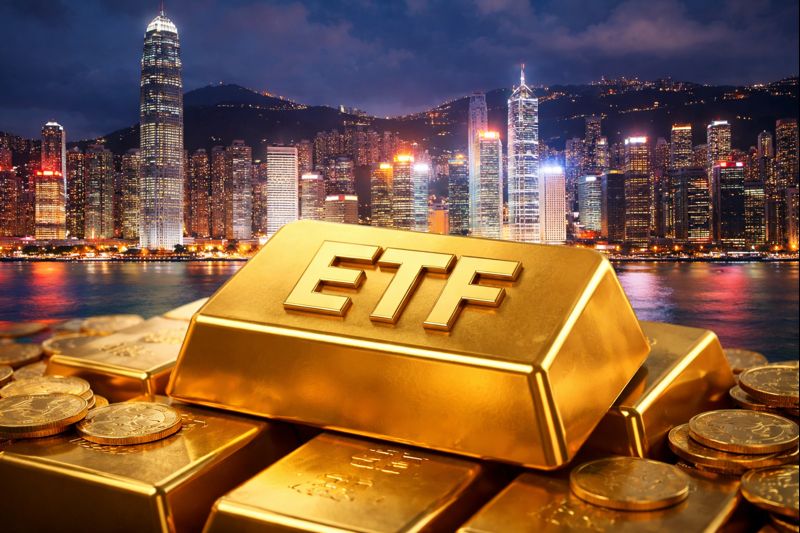
Hong Kong’s financial markets have taken a significant step by launching the Hang Seng Gold ETF (Exchange-Traded Fund), which features an innovative Ethereum-based tokenized share class alongside its conventional listing on the Hong Kong Stock Exchange. The move is toward integrating traditional investments and blockchain technology with the dual-structure product, which debuts amid heightened investor interest in gold. It also illustrates how regulated financial hubs are experimenting with tokenization to broaden access and efficiency in capital markets.
The fund, which tracks the London Bullion Market Association (LBMA) Gold Price AM and holds physical gold in secure Hong Kong vaults, introduces a tokenized unit class that will be issued on the Ethereum blockchain. While still subject to regulatory approvals and initially accessible only through qualified distributors, the move signals Hong Kong’s strategic push to unite traditional finance with emerging digital asset infrastructure.
Hang Seng Features A Dual-Structure ETF Bridging Traditional and Blockchain Markets
The Hang Seng Gold ETF, trading under ticker 03170 on the Hong Kong Stock Exchange, is a conventional, physically backed gold fund that is pioneering a tokenized unit class issued on Ethereum. Physical bullion supporting the fund is stored in vaults under institutional custodianship, meeting established industry standards for safety and provenance.
The conventional ETF operates like any other exchange-listed fund, allowing investors to buy and sell units on the secondary market and gain exposure to gold price movements without holding the metal directly. However, the tokenized class is designed to record ownership on a public blockchain. Each token corresponds to a unit or fraction of the same underlying gold ETF, marrying blockchain’s transparency and programmability with traditional asset backing.
HSBC serves as the tokenization agent, responsible for issuing the blockchain-based units. However, the Ethereum-issued tokens are not yet open for subscription or redemption because regulatory approvals are still undecided. Once cleared, investors will be able to subscribe to or redeem these tokenized units through qualified distributors, which is a controlled approach that ensures compliance while testing tokenization’s integration into regulated financial products.
Hong Kong’s Financial Hub Ambitions Via The Lens of Tokenized Assets
The Hang Seng Gold ETF’s tokenized component arrives at a time when blockchain-based financial products are gaining traction globally, and Hong Kong isn’t left behind. The country has been actively promoting itself as a digital asset hub, with regulators experimenting with frameworks that support tokenized products while maintaining investor protections. This regulatory environment positions the city at the intersection of traditional finance and digital innovation.
However, challenges exist. The tokenized units will initially be available only through qualified subscription and redemption channels, and no open secondary trading is permitted yet. This reflects a measured approach that balances innovation with risk management and regulatory oversight.
As investors and regulators evaluate the implications, the Hang Seng ETF could serve as a blueprint for future tokenized offerings and a future where traditional and digital finance coexist in regulated, compliant frameworks.