
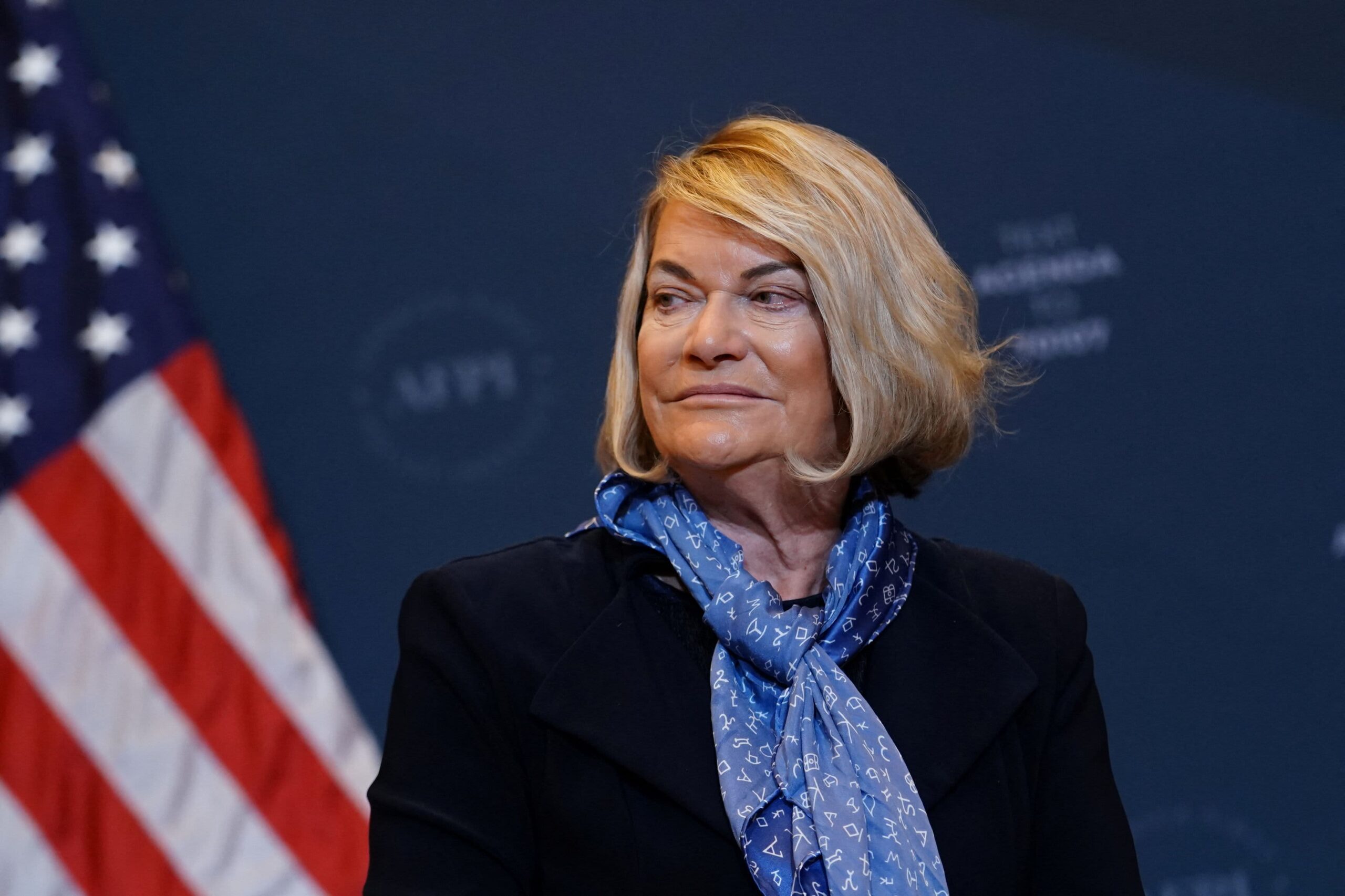
Senator Cynthia Lummis (R-WY), who chairs the Senate Subcommittee on Digital Assets, has told traditional banks to view stablecoins as a strategic opportunity rather than a threat.
In an interview with Fox Business host Maria Bartiromo, Lummis spoke out against the banking industry’s opposition to important cryptocurrency legislation that has been held up. “I’d like to see the banks embrace this rather than resist it,” Lummis said. She stressed that stablecoins are “an entirely new financial product that they can offer to their customers.”
Benefits for Consumers Are Highlighted
Lummis said stablecoins are a technology that benefits consumers and could change the way financial services operate. She said that blockchain-based stablecoins enable faster, cheaper transactions than traditional banking systems.
“Money can be sent on the blockchain faster than it can be sent through existing bank structures,” she said, adding that safety features developed with the Federal Reserve would help keep users safe.
The senator from Wyoming said that stablecoins were a good thing for consumers because they could make payments faster and easier, both at home and abroad. He said they were the next step in dollar-based finance.
Legislative Gridlock and Worries About Banks
Lummis’s statements come at a time when talks over a comprehensive crypto market structure bill, sometimes linked to the CLARITY Act framework, are ongoing. Banks and credit unions are very worried that stablecoin products, especially those that offer rewards or yields, could prompt people to move their money out of traditional accounts.
Community banks, which depend on stable deposits to lend to people in their communities, have been especially vocal about the risks to their business models. Lummis explained that much of the banking industry’s opposition is based on provisions in laws like the GENIUS Act, which lenders want to stop stablecoin products that are similar to interest-bearing accounts or other “bank-type” products.
Recently, a planned markup of the market structure bill was called off because Coinbase CEO Brian Armstrong suddenly pulled his support. He said there were concerns over stablecoin yield rules and cautioned that the draft might be worse than the present legal situation.
What Analysts Think About the Future of Stablecoins
Nic Puckrin, a digital asset analyst and co-founder of Coin Bureau, called the delays in passing the law “a real anticlimax” that would probably keep digital asset prices low for a while, until other geopolitical considerations came into play.
Puckrin stressed the bigger strategic value of stablecoins, especially now that many are worried about the dollar’s weakening. He said they were a “backdoor to strengthen the dollar” when there was geopolitical and macroeconomic hardship.
“Stablecoins will still be a competitor to bank deposits, no matter what,” Puckrin said. “There isn’t anything that can stop this other than a complete prohibition on all kinds of rewards.
Dealing With Innovation and Resistance
Lummis’s push aligns with her long-standing support for clear rules for digital assets and new ideas in the U.S. financial system. She is still a strong supporter of frameworks that protect consumers while also allowing technology to grow, as she is a significant figure in conversations around crypto policy.
Lummis’s message is clear: stablecoins give banks a chance to upgrade and offer more services, rather than letting non-traditional companies take over. Progress on market structure legislation has lagged because of criticism from the banking industry.
The future of dollar-backed digital finance in the US may depend on whether institutions listen to the call or keep resisting.