A New York district court granted Coinbase’s request for an interlocutory appeal, pausing the U.S. Securities and Exchange Commission’s (SEC) lawsuit against the crypto exchange.
Judge Katherine Polk Failla of the Southern District of New York approved the move on Tuesday, allowing the case to proceed to the Second Circuit Court of Appeals. The legal move comes as America’s largest crypto platform continues to seek transparency on the SEC’s stance on whether ether and other digital assets should be classified as securities.
The SEC sued Coinbase in 2023, alleging the platform operated as an unregistered exchange, broker, and clearing agency, while also challenging its staking and wallet services. Judge Failla previously dismissed the SEC’s claims about Coinbase’s wallet services but allowed other aspects of the lawsuit to continue.
Coinbase’s appeal argues there are major differences in legal interpretations regarding how the Howey Test—a framework from a 1946 Supreme Court case used to determine whether an asset qualifies as a security—applies to crypto assets. In her ruling, Judge Failla acknowledged this, citing “substantial ground for difference of opinion” on the matter and describing it as “a difficult issue of first impression for the Second Circuit.”
The decision to grant an interlocutory appeal, a rare procedural move, reflects the case’s complexity and the legal uncertainty surrounding the application of securities laws to crypto. Judge Failla stated that the conflicting authority on the Howey Test and crypto necessitates guidance from the Second Circuit, which could impact the SEC’s enforcement actions in the industry.
Coinbase Chief Policy Officer Faryar Shirzad called the ruling a setback for the SEC’s leadership, accusing the agency of spreading uncertainty in the crypto sector. “Gratitude to Judge Failla for allowing the interlocutory appeal,” Shirzad said in a statement on X.
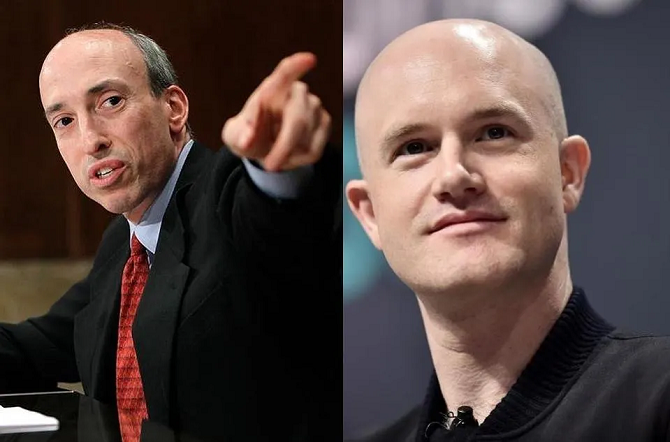
In December, Coinbase CEO Brian Armstrong warned law firms not to hire former staff from the SEC whom he views as hostile to the crypto industry.
Armstrong informed law firms that if they engage any former SEC officials who he believes have “committed bad deeds” under the leadership of Gary Gensler and the Biden administration, Coinbase would sever ties with them.
Armstrong highlighted the appointment of former SEC Enforcement Division Director Gurbir S. Grewal as a partner at Milbank law firm in October as a key example. Grewal was involved in several high-profile enforcement actions against crypto firms like Coinbase, Kraken, and Ripple, as well as international entities such as Binance. Armstrong made it clear that Coinbase would not work with Milbank or any firm that hires such individuals.
Coinbase CEO criticized the SEC’s stance under Gensler, accusing the agency of creating regulatory hurdles that make it impossible for crypto companies to comply. Gensler insisted that most cryptocurrencies qualify as securities, urging firms to register with the SEC, but many in the crypto industry argue that the agency’s rules are outdated and not suitable for the digital asset market.