What Happened at Eclipse—and Why Now?
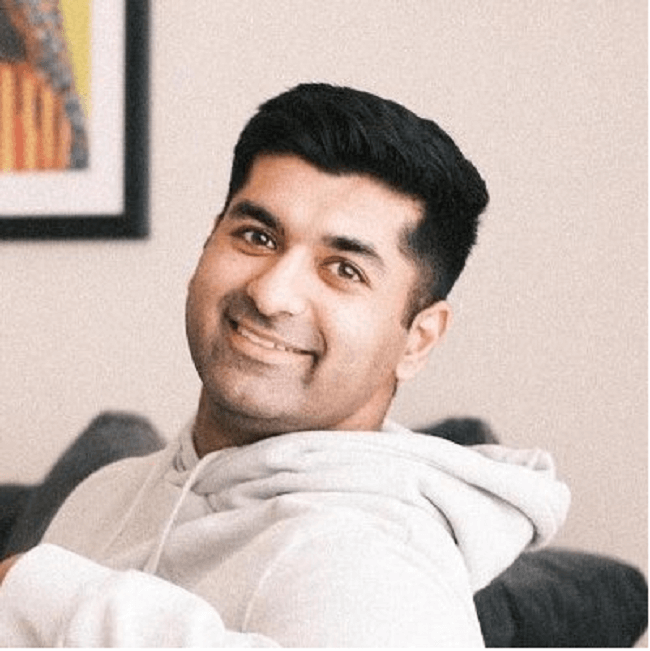
Neel Somani, the founder of Ethereum layer-2 protocol Eclipse Labs, has stepped down as Executive Chairman effective October 2025, formally ending his leadership tenure at the company. The decision follows a multi-year transition away from day-to-day management and comes as Eclipse moves deeper into a new phase centered on application development rather than infrastructure expansion.
In a joint statement, Somani said the move reflects his plan to focus full-time on machine learning research and other intellectual work. Eclipse confirmed that governance authority now sits fully with the current executive team and board, removing any remaining overlap from earlier leadership arrangements.
The departure closes a long chapter for Eclipse, which has undergone repeated strategic and organizational changes since its founding. What began as an ambitious scaling project has narrowed into a more focused effort built around a single product thesis.
Investor Takeaway
How Did Eclipse’s Strategy Evolve After the Terra Collapse?
Eclipse was founded in 2022, shortly after the collapse of the Terra ecosystem reshaped crypto priorities. In the aftermath, builders and investors shifted attention toward modular blockchain designs that separate execution, settlement, and data availability. Eclipse entered that debate with a clear technical bet.
The project set out to combine Ethereum’s settlement and liquidity layer with the Solana Virtual Machine, the high-performance execution engine originally developed for Solana. Early on, Eclipse marketed itself as a rollup-as-a-service provider, pitching its stack to teams that wanted fast execution without abandoning Ethereum’s economic base.
By 2023, that plan changed. Eclipse pivoted toward building a dedicated, high-throughput Ethereum layer-2 powered by SVM execution. The idea gained attention late that year as developers looked beyond EVM-only scaling models and searched for new performance paths.
What Role Did Capital and Governance Changes Play?
Eclipse raised a $15 million seed round before closing a $50 million Series A in early 2024. The Series A was co-led by Placeholder and Hack VC, with participation from Polychain Capital, Delphi Digital, Maven 11, Fenbushi Capital, and other crypto-focused funds.
After the funding round, Somani moved from Chief Executive Officer to Executive Chairman and appointed Vijay Chetty as CEO. People familiar with the matter said the change was planned ahead of the raise and did not affect Somani’s ownership or board seat. Eclipse declined to provide detailed commentary at the time, which led to mixed readings outside the company.
Such transitions have become common among infrastructure-heavy crypto startups as they grow beyond their founding phase. Founders often step back from operations while retaining influence through equity and board roles, especially once products move from research into delivery.
Why Did Eclipse Narrow Its Focus to One Application?
Eclipse launched its mainnet in 2025, hitting a major technical milestone. But by then, the layer-2 landscape had changed. Competition intensified, user retention proved difficult, and performance improvements alone no longer translated into durable traction.
Later that year, Eclipse reassessed its direction. With board backing, Somani helped guide a pivot toward application development and appointed Sydney Huang as Chief Executive Officer. Under Huang, the company said it would concentrate on building a single flagship application on top of its own infrastructure instead of operating as a general-purpose network.
“Eclipse’s main focus needs to be on one app,” Huang wrote in a recent essay. “Not a few apps, not all the apps that have been deployed — one app.”
The application has not been publicly disclosed. Eclipse has said further details will be shared in the coming months.
Investor Takeaway
What Comes Next for Eclipse Without Its Founder?
Somani’s step down formalizes a gradual withdrawal that began when he left the CEO role in 2024. While he remains the founder, the move removes any ambiguity around executive authority as Eclipse pushes ahead with its revised plan.
In his statement, Somani pointed to growing interest in research spanning large language models, formal verification, and mechanistic interpretability—areas closer to academic and lab-driven work than running a scaling blockchain project.