

Why Are European Banks Exposed to Corporate Crypto Adoption?
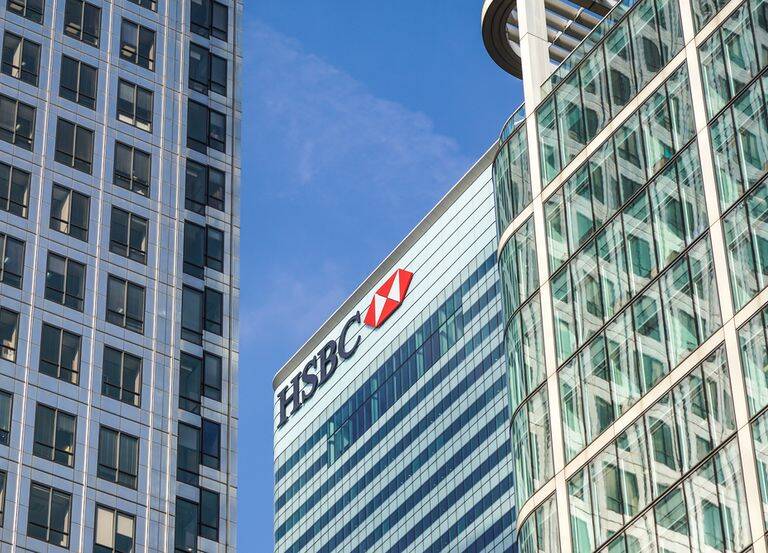
European banks with large corporate cash management businesses could face revenue pressure if companies begin using digital assets to manage liquidity and payments, according to RBC Capital Markets. Institutions such as HSBC and Deutsche Bank are among the most exposed, reflecting their reliance on corporate payments as a core revenue stream.
The analysis highlights a potential shift in how corporates handle cross-border transactions, an area traditionally dominated by banks. If digital assets, particularly stablecoins, begin to take share in this segment, banks could see both fee income decline and funding costs rise.
RBC’s survey of 18 European banks found that 72% identified cross-border payments as the most immediate use case for digital assets. Corporate payments were also described as the application “nearest to market,” suggesting that adoption risk is concentrated in areas where banks generate stable, recurring revenue.
How Large Could the Revenue Impact Be?
RBC estimates that highly exposed banks could lose up to 7% of revenue depending on how quickly digital money gains traction. HSBC and Deutsche Bank stand out due to the scale of their corporate payments businesses, which account for 10% or more of total group revenues.
BNP Paribas also has a sizable corporate payments operation, though it represents a smaller share of overall group income. The variation in exposure reflects differences in business models across European lenders, with some more reliant on transaction banking than others.
The risk is not limited to direct payment fees. A shift toward digital assets could also affect deposit bases, as corporates move liquidity into tokenized forms, potentially increasing funding costs for banks.
Investor Takeaway
Do Banks See Digital Assets as a Real Threat?
Despite the identified risks, most banks do not yet view digital assets as a core part of their offering. RBC found that 83% of surveyed institutions do not see crypto as a substitute for existing services, indicating a gap between perceived risk and current strategic positioning.
Demand signals also remain mixed. Around 67% of banks reported limited demand for stablecoins, and all respondents said the current impact on liquidity and treasury management is negligible. This suggests that while the technology is advancing, adoption at scale has not yet materialized.
However, this disconnect could narrow quickly if corporates begin integrating digital assets into payment workflows, particularly for cross-border transactions where cost and speed advantages are more visible.
Investor Takeaway
How Are Banks Responding to the Shift?
European lenders are beginning to explore digital asset strategies, particularly around stablecoins. Institutions including Deutsche Bank, Barclays, and BNP Paribas are participating in bank-led stablecoin initiatives, signaling a coordinated effort to retain control over payment infrastructure.
These efforts reflect a broader attempt to integrate digital assets into existing financial systems rather than compete directly with them. By developing their own stablecoin frameworks, banks aim to preserve their role in transaction processing while adapting to changing technology.
The outcome will depend on execution and timing. If corporate adoption of crypto accelerates faster than banks can deploy alternatives, traditional payment revenues could come under pressure. If not, banks may retain their position while incorporating digital assets into their existing models.


