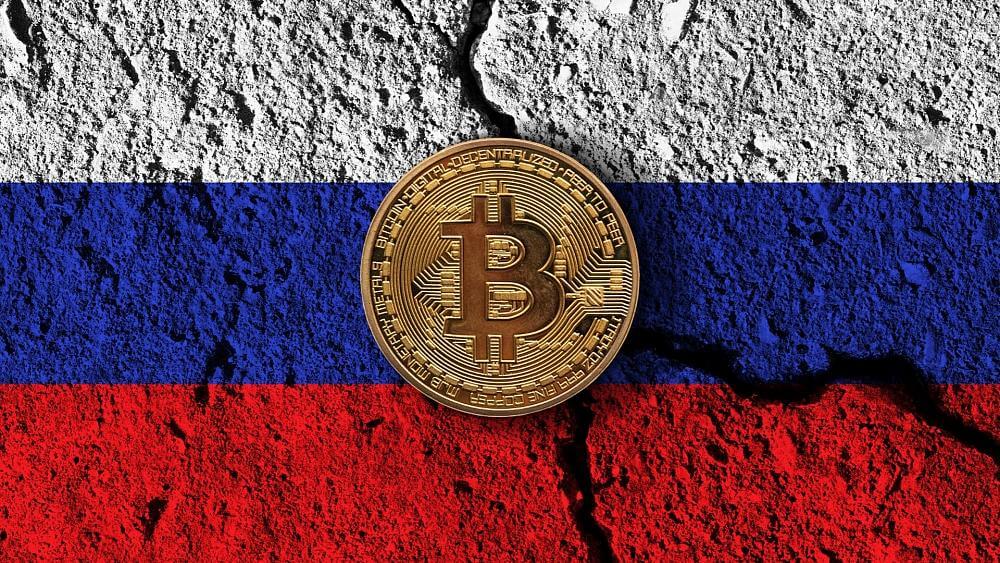
Russia moved to introduce new taxes on cryptocurrency transactions as Bitcoin reaches record levels against the ruble.
On Nov. 27, Russia’s Federation Council approved a federal bill that recognizes digital currencies as property and imposes a 13%-15% personal income tax on cryptocurrency sales. The bill also exempts Russian crypto miners from value-added tax (VAT) on mined coins.
The legislation passed three readings in the State Duma and now awaits President Vladimir Putin’s signature to become law. Once enacted, it will take effect upon official publication.
The new law mandates that Russian crypto miners report their activities to local authorities, with failure to comply resulting in fines of 40,000 rubles (about $360). However, mining services provided by authorized operators will not be taxed within Russia.
The bill’s approval coincides with Bitcoin’s surge to an all-time high of 11 million rubles, fueled by Bitcoin’s global rise and the ruble’s depreciation against the US dollar. On Nov. 27, the ruble hit a multiyear low, with the US dollar trading at 113 rubles per dollar, down 25% over the past year.
The bill, originally introduced in December 2020, passed its first reading in 2021. Recently, the Federal Tax Service proposed taxing miners’ unrealized gains, while the government imposed a power consumption limit of 6,000 kilowatt-hours per month for unregistered individuals mining Bitcoin.
Russia began testing cross-border cryptocurrency payments earlier in September, following new legislation signed by President Vladimir Putin in July.
The law permits these payments while maintaining a ban on using cryptocurrencies as regular legal tender within Russia. However, the law does not clearly outline rules for these transactions, giving Russia’s central bank authority to oversee an “experimental” regulatory framework.
The move is part of Russia’s strategy to circumvent international sanctions imposed after its invasion of Ukraine in February 2022. Since then, Russia faced 16,500 sanctions from countries including the U.S., U.K., European Union, Australia, Canada, and Japan.
The law’s details, especially on the practical execution of crypto payments, remain vague. It grants the central bank control over the experimental regime but does not specify the rules for cross-border transactions.
According to Bloomberg, Russia plans to use its National Payment Card System for converting rubles into cryptocurrencies during the trial. If the trial succeeds, crypto platforms could be established at the Moscow and St. Petersburg exchanges next year.
Experts suggest that the framework’s exact parameters are still unclear, and the central bank may change its approach as needed. The central bank will publish guidance soon, determining which companies can participate in the experiment.
The law’s intent is to use cryptocurrencies to counteract sanctions, as confirmed by statements from senior Russian leaders, including President Putin. However, the implementation remains uncertain due to the central bank’s extensive authority over the process.
Russia suffers massive delays in payments with major trading partners such as China, India, and the United Arab Emirates as banks in these countries, under Western regulatory pressure, exercise increased caution.