In under a decade, stablecoins have evolved from niche crypto experiments into a deeply established digital money. While many stablecoins remain pegged to the U.S. dollar, the ecosystem now includes euro, yuan, and algorithmic-pegged tokens. This diversity could either reinforce the dollar’s global reach or usher in a more multipolar financial era.
One striking example of how fast the space is changing is USD1—a politically branded U.S. dollar stablecoin launched in 2025, which has quickly become the fifth largest globally, reaching a market capitalization of $2.68 billion. Its success underlines how stablecoins are no longer crypto curiosities but serious tools in the global monetary system.
Stablecoins as the Next Phase of Digital Money
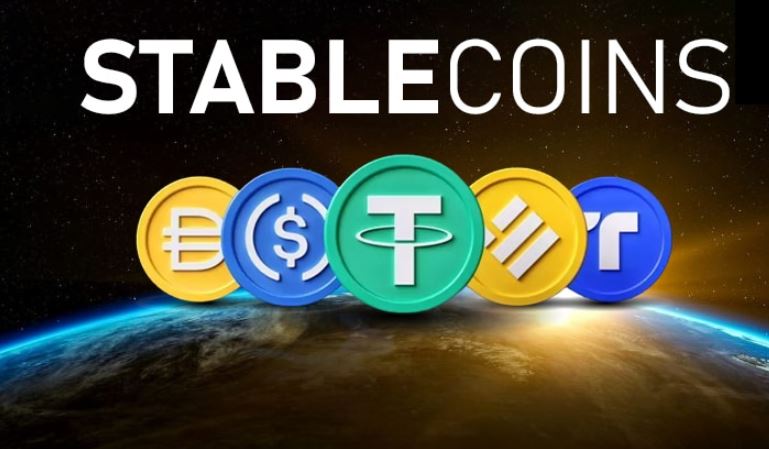
Stablecoins have grown into an important force in finance, bridging the stability of fiat with the efficiency of blockchain. Dollar-backed tokens such as USDT, USDC, and USD1 remain dominant because of their liquidity and integration, but the market is diversifying. Euro and yuan pegged stablecoins, along with algorithmic and synthetic versions, are gaining traction in regions seeking local digital alternatives.
In countries with volatile currencies, stablecoins now serve as digital lifelines, offering price stability and seamless access to global liquidity.
“Every USDT, USDC, or on-chain USD transaction is another line of code binding the world to the greenback,” said Sid Sridhar, founder of Bima Labs. “The irony is that in trying to escape banks and borders, the world built a second, internet-native Federal Reserve.”
At the same time, some nations are experimenting with sovereign-backed or hybrid stablecoin tokens that blend central bank oversight with private innovation. Wilfred Daye, CSO for Mercurity Fintech Holding Inc, and the CEO for Chaince Securities, LLC, observes that this trend is drawing traditional finance closer to crypto:
“Banks and payment providers are turning stablecoins into a regulated payments infrastructure. Once acquirers and gateways add one-click EUR and USD tokens, stablecoins stop being a crypto niche — they become mainstream.”
Investor Takeaway
Stablecoins are rapidly evolving from crypto instruments to mainstream financial infrastructure, signaling a long-term shift in global payment systems.
The Dollar Paradox: The Dollar’s Strongest Ally or Its Silent Threat?
Despite the rise of alternatives, the U.S. dollar remains the backbone of the global stablecoin market. Over 95% of circulating stablecoins are pegged to the dollar, embedding USD rails across crypto, fintech, and cross-border settlement.
Daye describes this situation as “dominance with a new plumbing risk” where stablecoins extend the dollar’s reach but introduce technical vulnerabilities, such as the potential market impact if issuers must rapidly liquidate U.S. Treasuries to meet redemptions.
Sridhar echoes this sentiment, arguing that stablecoins amplify rather than weaken U.S. power:
“Stablecoins are not a threat to the dollar; they’re the most powerful distribution channel it has ever had. The dollar doesn’t just sit in vaults in New York anymore—it flows natively through DeFi pools, remittance rails, gaming platforms, and cross-border commerce.”
USD1 and the Politics of Digital Dollars
The launch of USD1, backed by World Liberty Financial and endorsed by Donald Trump, reshaped the stablecoin narrative. Its political branding and rapid adoption signal a new era where stablecoins are intertwined with state interests and national strategy.
Daye calls USD1 “a political and market signal,” adding that if it gains wider distribution through exchanges, fintechs, and banks, it could pressure incumbents like USDC and USDT on transparency and fees. Sridhar frames it more broadly:
“A former president branding a dollar stablecoin is the clearest signal yet that this is not fringe crypto—this is mainstream financial infrastructure.”
By halting plans for a U.S. central bank digital currency (CBDC), Trump may have indirectly accelerated stablecoin adoption. Without a federal digital dollar, the market has turned to private, regulated alternatives to fill that void. In essence, the U.S. appears to be betting on stablecoins, not CBDCs, as its digital money standard.
Investor Takeaway
The launch of politically backed USD1 marks a pivotal shift — positioning private stablecoins, not CBDCs, as the U.S. bet for digital monetary leadership.
A Regulatory Crossroads
The regulatory landscape is shifting just as fast. The U.S. GENIUS Act—enacted earlier in July 2025—was the first major legislative framework for stablecoins, requiring issuers to maintain 1:1 backing with cash or Treasury assets, undergo audits, and operate under federal oversight. By establishing clear guardrails, the U.S. positioned itself as a global leader in stablecoin regulation.
The GENIUS Act has since influenced countries worldwide to revisit their approaches. China is reportedly exploring yuan-backed stablecoins to promote international use of the renminbi, while South Korea is drafting laws to permit won-based stablecoins.
Japan, Singapore, and India are building regulatory frameworks and innovation hubs to encourage stablecoin development. In Hong Kong, Standard Chartered, HKT, and Animoca Brands are seeking licenses for a Hong Kong dollar-backed stablecoin, and across Europe, the MiCA regime has set the stage for euro-denominated tokens.
Still, as Sridhar warns, “Law alone is not liquidity.” For euro-based stablecoins to gain meaningful market share, banks must issue them at scale, and regulators must actively cultivate use cases across payments, trade, and remittances.
The Path Ahead
Whether stablecoins strengthen or dilute U.S. monetary dominance depends on how institutions and policymakers navigate the next phase. Daye argues that the outcome will be decided not by crypto startups but by banks and payment processors:
“If the big acquirers and gateways add stablecoins at checkout or for B2B payouts, that’s when they go from niche to mainstream.”
Sridhar agrees but frames it as an evolution of money itself:
“Institutions don’t just provide credibility; they provide pipes, distribution, and regulatory air cover. Without them, stablecoins are a crypto sideshow. With them, they are the operating system of global finance.”
Stablecoins may not overthrow the dollar, but they are redefining how it moves. What lies ahead is not a battle over who issues money, but who programs it—and whether the future’s financial rails remain unified or fragment into competing digital ecosystems.
Investor Takeaway
Stablecoin regulation is rapidly globalizing, with the U.S. GENIUS Act setting the pace for worldwide adoption and compliance.
Conclusion
The balance of power in global finance is no longer defined by reserve currencies but by digital liquidity. If regulated stablecoins keep expanding under frameworks like the GENIUS Act and MiCA, they could form the backbone of the next generation of money, linking traditional finance and blockchain into one programmable network.