
KEY TAKEAWAYS
- Crypto stocks like Coinbase offer diversified revenue beyond volatile trading fees.
- MicroStrategy’s 720,737 BTC holdings provide direct leverage to Bitcoin’s price movements.
- Riot Platforms combines efficient mining with AI-driven data center revenue to achieve stability.
- Marathon Digital’s large BTC treasury and cost improvements position it for rebounds.
- Galaxy Digital’s growing AUM and fintech fund make it a broad winner in crypto finance.
The crypto markets are unstable, but equities that are linked to them give you indirect exposure with the steadiness of public corporations. Bitcoin is trading at over $67,000 and Ethereum at about $1,976. These companies are benefiting from greater institutional adoption, ETF inflows, and infrastructure plays.
They’re not just riding the crypto wave; they’re also developing the infrastructure to support the growth of DeFi and tokenized assets. I looked through miners, exchangers, and treasury holders to find the best ones that have a good mix of risk and reward.
Top Crypto Stocks to Diversify Your Portfolio
Here are some of the key coins to boost your portfolio;
Coinbase (COIN): The Exchange Powerhouse That Makes Things More Diverse
Coinbase remains the primary channel for both regular people and businesses to access cryptocurrency. Its user base and revenue streams have grown beyond trading fees alone. The corporation had $11.3 billion in cash at the end of 2025, putting it in a good position to acquire other companies and invest in technology.
In the first quarter of 2026, estimate subscription and service revenue to be between $550 million and $630 million, plus about $420 million in transaction revenue. This is because of the growth of stablecoin interest and custody.
Coinbase is different since it is moving into stablecoins and expanding internationally. For example, revenue from USDC alone could grow significantly if the rules were clearer, as in the GENIUS Act.
With a market cap of roughly $40 billion and a trading volume of $5.2 trillion, it’s cheap if crypto volumes return. Connect this to our recent news about spot Bitcoin ETFs raising $458 million in the fall. Coinbase collects most of them, turning volatility into a steady stream of fees.
MicroStrategy (MSTR): The Best Way to Invest in Bitcoin
MicroStrategy is the best way to get pure Bitcoin leverage. The corporation has 720,737 BTC as of March 2, 2026. They bought them for $54.77 billion, or an average of $75,985 per coin. At current values, they are worth over $47 billion.
Last week, they bought 3,015 BTC for $204 million, paying for it by selling stocks, a classic Saylor tactic. With Bitcoin back above $70,000 amid global concerns, MSTR is a bigger bet on BTC’s store-of-value story.
With a market price of about $45–47 billion, it has grown from a software company to a crypto treasury powerhouse. However, it is cleaner than its competitors because it doesn’t mine. Watch for their preferred dividend to go up to 11.5%. This shows that they are confident in the cash flow from their BTC holdings.
Riot Platforms (RIOT): AI Diversification Meets Mining Efficiency
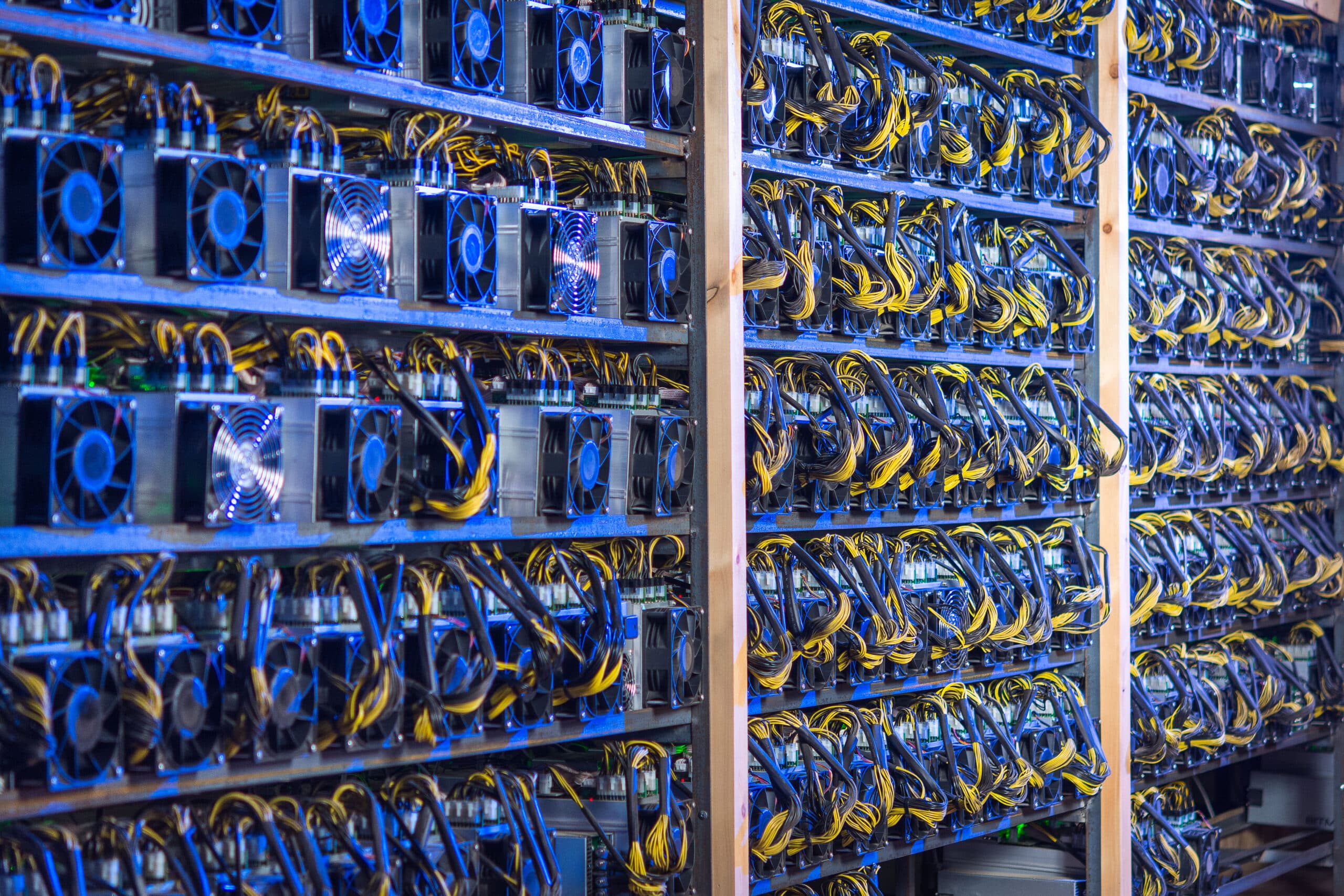
Riot differs from other miners because it has cheap power and is moving into AI data centers. They had 18,005 BTC, worth roughly $1.2 billion (adjusted for $67k BTC), and made 5,686 BTC in 2025, an 18% increase over the previous year.
Last year, revenue reached an all-time high of $647.4 million. The hash rate was 66.4 EH/s, and a new AMD data center lease will start in 2026, bringing in regular cash.
The cost of mining one BTC went up to $49,645, but their Texas locations have around 100% uptime, which protects them from surges in network difficulty. Analysts are targeting $26.44, a 78% increase from $14.86. This is a good sign if Bitcoin stays stable. Connect this to broader patterns in mining, such as selling BTC to fund AI upgrades, but Riot’s $310 million in cash on hand keeps it flexible.
Marathon Digital High-Volume Miner with Treasury Strength (MARA)
Marathon is a volume play because it has 53,822 BTC after producing 8,799 in 2025. Output in the fourth quarter fell to 2,011 BTC due to higher mining difficulty, but efficiency rose to 18 J/TH, significantly reducing costs. Revenue rose to $907 million a year, but the fourth quarter posted a $1.71 billion loss due to $1.5 billion in BTC impairments.
These were not financial losses, but they did show how sensitive prices are. Their relationship with Starwood for AI data centers gives them more options and reduces their dependence on mining margins.
Analysts think there is a 110% chance the price will rise to $22.41 from $10.66, especially if BTC rebounds. For more information, read our article about miner pivots. Hold on, it’s better to connect ETF inflows to miner liquidity.
Galaxy Digital (GLXY): The Leader in Institutional Crypto Finance
Galaxy connects tradfi and crypto through trading, financing, and managing assets. AUM was $6.4 billion at the end of 2025, up from net inflows, and early 2026 numbers show it is above $10.1 billion. Last quarter’s net income of nearly $500 million shows that the company is doing well and is moving to AI data centers for steady revenue.
Its Nasdaq listing increases liquidity, and Galaxy’s diversified portfolio performs better in downturns than that of pure miners. Their Helios upgrade for 133 MW AI/HPC by the middle of 2026 puts them in a good position for the “great convergence” of AI and crypto.
Bitmine Immersion (BMNR)
The Ethereum Treasury Innovator Bitmine stands apart because it focuses on Ethereum. It has 4.474 million ETH (3.71% of supply) worth $8.84 billion, and 3.04 million of those are staked for $172 million in annual rewards.
They added 50,928 ETH last week despite the price drop. This brought their total to $9.9 billion in crypto and cash. MAVAN staking will start in the first quarter of 2026 and aims to get 5% of the ETH supply. With prices ranging from $18.98 to $33.65, it’s a strong bet on ETH as the backbone of DeFi. See our report.
Finding Your Way Through Risks and Opportunities
These equities do well when more people use cryptocurrencies, but they must contend with regulations and price fluctuations. For balance, spread your money between different exchanges, treasuries, and miners. They’re not just crypto bets anymore; they’re infrastructural plays that will last for years.
FAQs
What defines a crypto stock?
Companies with core businesses in mining, exchanges, or holding digital assets as treasury reserves.
Are crypto stocks safer than buying coins directly?
Yes, they add corporate governance and potential dividends, but still correlate with crypto prices.
How much should I allocate?
Start with 5-10% of your portfolio, depending on risk tolerance.
What’s the biggest risk in 2026?
Regulatory changes or prolonged bear markets, though, ETF inflows suggest institutional support.
Can I buy these on regular brokers?
Absolutely, most are Nasdaq-listed for easy access.
References
- The Mootley fool: Crypto Is Sliding. Here’s How I’d Invest $1,000 Right Now for the Long Term
- Yahoo Finance: Thinking About Investing in Crypto in 2026? Here Are My Top Picks