
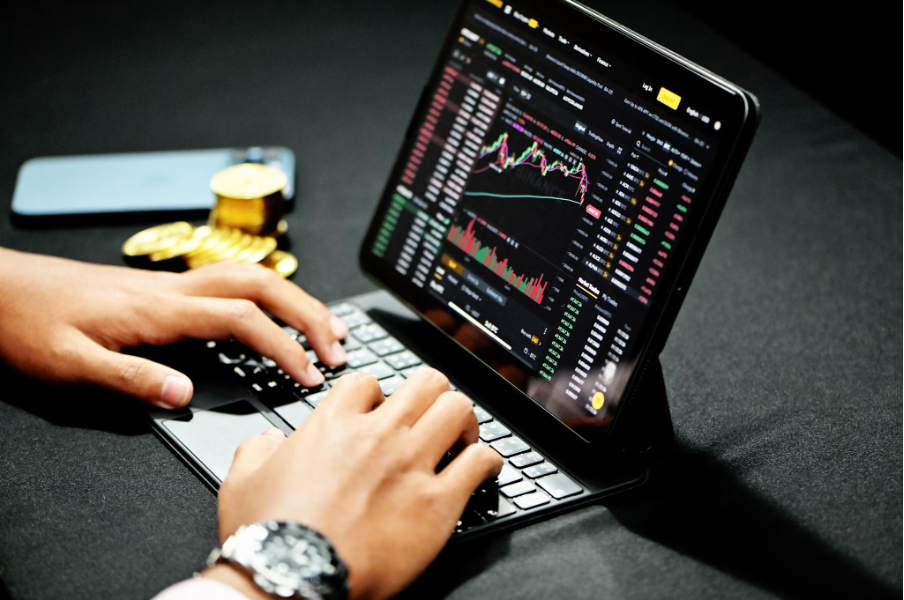
In the fast-paced world of finance, trading charts are indispensable tools for anyone engaged in the markets. These charts are not just mere representations of price movements; they are the backbone of technical analysis, offering traders and investors a visual interpretation of market data over various periods.
Trading charts come in various forms, including line charts, bar charts, and the more popular candlestick charts. Each type provides different insights, catering to the diverse needs and strategies of traders. For instance, line charts are straightforward, showing the closing prices over a set period and are best for identifying broader trends. Bar charts provide more data such as opening, high, low, and closing prices (OHLC), giving a detailed view of the market’s movements within a specific timeframe. Meanwhile, candlestick charts offer a similar range of data to bar charts but with a more visual distinction between open and close prices, making it easier to understand the market’s direction and momentum.
The ability to read trading charts effectively is a fundamental skill for any trader. It involves interpreting various patterns and indicators to forecast potential price movements. Traders use this information to make educated decisions about when to buy, sell, or hold financial instruments. Some of the most common patterns observed in these charts include head and shoulders, double tops and bottoms, and triangles, each indicating different market sentiments and potential price outcomes.
Moreover, trading charts are enriched with various technical indicators like moving averages, Relative Strength Index (RSI), MACD (Moving Average Convergence Divergence), and Bollinger Bands. These tools help traders analyze market conditions, identify trends, measure volatility, and determine momentum. For example, moving averages smooth out price data to identify the direction of the market trend, while RSI measures the speed and change of price movements to indicate overbought or oversold conditions.
The strategic use of trading charts has evolved with advances in technology. Today, traders have access to real-time data and interactive charts that can be customized with a range of technical indicators to suit their trading strategies. This accessibility allows traders, from professionals in financial firms to individual investors at home, to make quicker and more informed decisions.
The global nature of financial markets means trading charts are crucial for not only stock trading but also for commodities, forex, and cryptocurrencies. Each market has its peculiarities, and the ability to adapt and interpret charts across these markets can significantly enhance a trader’s ability to succeed.
Despite their numerous advantages, trading charts are not without limitations. They require a substantial learning curve to master and are based on historical data, which does not always guarantee future performance. Thus, while they are powerful tools, they should not be used in isolation. Successful traders often combine chart analysis with fundamental analysis, which considers economic, financial, and other qualitative and quantitative factors.
In conclusion, trading charts are more than just lines and bars on a screen; they are vital for making informed trading decisions. As financial markets continue to evolve, the role of trading charts grows increasingly significant, helping traders navigate the complexities of investing and enhancing their ability to achieve profitable outcomes. Whether you are a seasoned trader or a newcomer to the markets, understanding and utilizing trading charts can significantly impact your trading success.