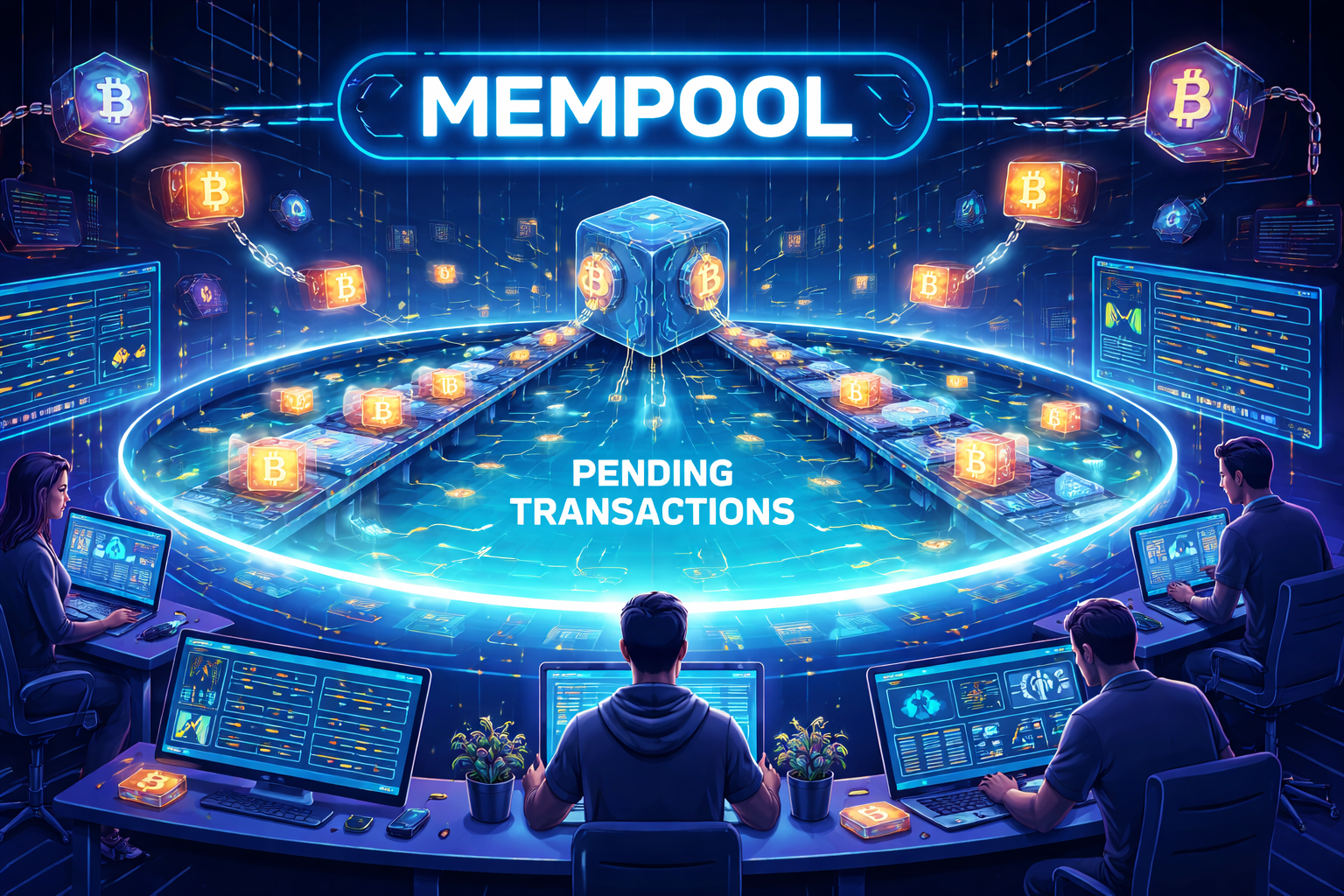

Bitcoin has stood the test of time, proving itself as the most secure decentralized network. However, its rigid infrastructure has left limited room for practical use cases in Web3 and traditional finance. This is about to change as we witness a Bitcoin Renaissance—a period of thriving layer 2 projects leveraging Bitcoin’s security and unlocking billions in value, empowering retail and institutional investors.
In this article, Matvii Diadkov, founder of Bitmedia Web3 advertising network and Chainers NFT game, explores this quiet revolution (which is now making waves) that goes beyond Bitcoin’s price growth to approach the $100k mark. Diadkov talks about a transformative period in the crypto world. With Bitcoin’s enduring security as its foundation, the era of layer 2 projects is emerging, opening unprecedented value and broadening the scope for both retail and institutional engagement.
#Bitcoin’s Layer 2 ecosystems are booming 🚀Just look at the chart to see this incredible #growth 👇- and the year’s not even over yet📈
What to expect if this rapid growth continues and why does this matter today? Check out the article for more #insights:… pic.twitter.com/ul47IvgjeE
— Matvii Diadkov 🇺🇦 (@dyadkov) November 28, 2024
Understanding the Bitcoin Renaissance
Bitcoin has long been regarded as digital gold for preserving value and hedging against inflation. However, the popular belief was that it couldn’t offer much beyond that: with a low transaction speed (up to 30 minutes of block confirmation time), no programmability (Bitcoin doesn’t support smart contracts), and limited scalability (it can handle only a few transactions per second), what more can it achieve?
It turns out that there is another side to Bitcoin that’s now attracting a growing number of investors and crypto enthusiasts: the blockchain can be used as the underlying infrastructure for multiple Web3 use cases. How? Layer 2 networks are the connecting piece.
This is the Bitcoin Renaissance – the ongoing development of multiple products built on top of Bitcoin that bring more flexibility, scalability, and open the door to decentralized finance (DeFi) and Web3 applications.
This may be the beginning of a new era for Bitcoin, although I bet few crypto holders notice it amid the excitement over new price records following Donald Trump’s US election victory.
The Rise of L2 Bitcoin Networks
Layer 2 (L2) platforms are secondary networks built on top of a layer 1 mainnet, such as Bitcoin or Ethereum. The main goal of L2s is to enhance scalability while inheriting the security of the underlying mainnet.
Although Bitcoin pioneered the first-ever layer 2 network with the Lightning Network in 2015, these scaling solutions have mainly gained popularity on Ethereum.
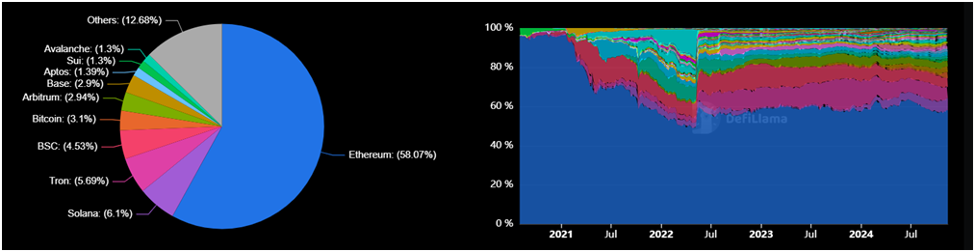
For Ethereum, the main goal of L2s was to boost scalability. Other than that, Ethereum itself is capable of hosting multiple decentralized applications (dapps), and it still dominates the DeFi space to this day. Ethereum accounts for nearly 60% of the sector’s aggregate total value locked (TVL) of $130 billion as of mid-November 2024.
When it comes to Bitcoin, L2 networks are not only bringing unprecedented scalability but also unlocking use cases that were previously impossible by integrating smart contract functionality, transforming Bitcoin into a Web3 and DeFi-friendly blockchain.
Thanks to L2 solutions, the Bitcoin ecosystem reaches a whole new level, capable of hosting a wide range of applications. For example, the Lightning Network offers instant BTC payments at a low cost, while L2s like Merlin, Bitlayer, or the Core chain unlock DeFi use cases like lending, decentralized trading, and yield farming.
The total value locked (TVL) in Bitcoin layer 2 networks has surged in 2024, growing from about 7,500 BTC in March to over 40,000 BTC as of this writing, with nearly a dozen new players entering the market since March. This means a 430% increase within eight months after years of stagnation.
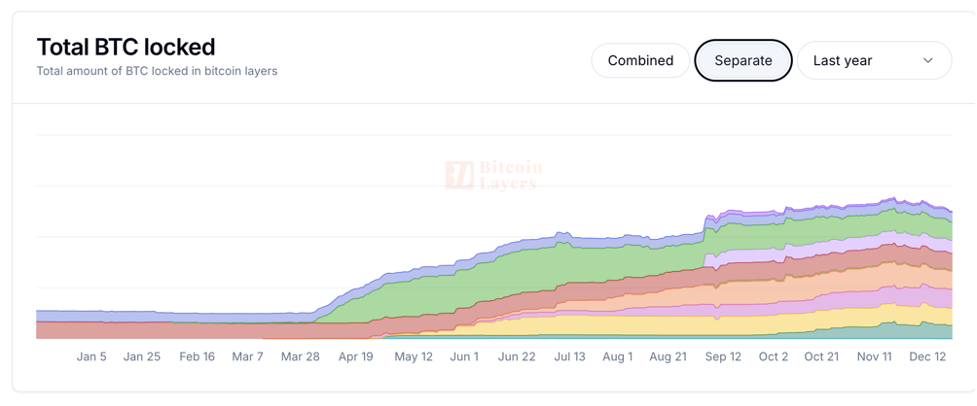
In USD terms, the L2 network’s TVL increased from $480 million to over $3.5 billion, representing a 630% increase that has been amplified by the 35% gain in the BTC price over the last eight months.
If L2s continue to hoard BTC at a similar pace, they may reach the $10 billion TVL mark in the first half of next year, surpassing Ethereum’s L2 sector.

Beyond the Price of Bitcoin
This new era of Bitcoin is not about its inflation-hedging capabilities anymore – the cryptocurrency is adopting a modular approach to integrate programmability and support all kinds of applications. This aspect adds a future-proof dimension to the oldest cryptocurrency out there, positioning it as a versatile foundation for Web3 and DeFi ecosystems.
Traditionally, Bitcoin has been the most conservative blockchain network. While this means that it moves very slowly, it also suggests that it’s predictable, while its network of thousands of nodes coupled with the Proof of Work algorithm makes it the most secure chain.
Despite its rigidness, developers have explored ways to expand Bitcoin’s functionality. For example, in 2023, Ordinals, and later Runes, brought new functionality directly to Bitcoin’s core chain by inscribing data on satoshis, the smallest unit of Bitcoin. This has enabled the creation of non-fungible tokens (NFTs) and other digital assets directly on the mainnet itself. However, Bitcoin needs scaling, and the first attempts were made by the Lightning Network.
I came across Lightning a few years ago but didn’t find it revolutionary due to some lack of design in the channel system, which inclined to centralization.
The latest L2 networks are different as they propose much better tech, and they will become much more useful while preserving the security of Bitcoin’s mainnet.
The Current State of L2 Developments
The Bitcoin L2 sector has been making great progress this year. Today, there are many diverse L2 networks that focus on scaling, smart contract functionality, and compatibility with the Ethereum Virtual Machine (EVM), enabling developers to build Bitcoin-based smart contracts with Solidity.
In 2022, Rootstock and Stacks were the only L2s that showed the way of how to bring smart contracts to Bitcoin.
Rootstock is an EVM-compatible sidechain that allows users to deploy dapps secured by Bitcoin. The network hosts data on its nodes while securing users’ BTC deposits via a 5-of-9 federated multisig mechanism called Powpeg.

Stacks is a sidechain that acts as the programmability layer for Bitcoin, offering infrastructure and intuitive tools to build dapps. The network hosts dozens of centralized and DeFi apps, covering use cases like staking, trading, decentralized ID, NFTs, decentralized social media, gaming, and stablecoins.
During the last twelve months, the Bitcoin L2 market has expanded thanks to new players, including:
Merlin is an EVM-compatible chain that uses zero-knowledge (zk) rollups to scale Bitcoin transactions. It supports Bitcoin-based tokens minted with Ordinals or Runes protocols.
Merlin supports dozens of DeFi apps, as well as gaming, social, NFT, and launchpad apps. Popular DeFi apps include Avalon Finance, a lending dapp that is also available on many other Bitcoin L2s, and Merlin Swap, a DEX facilitating the trade of multiple Bitcoin-related assets.
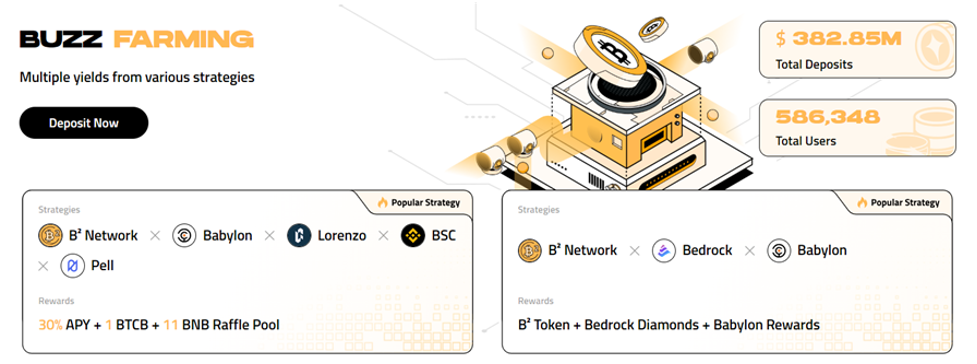
BSquared is another Bitcoin L2 network that leverages ZK rollups and offers smart contract functionality. It offers multiple bridges for Bitcoin and EVM chain networks.
The network supports over 100 applications across multiple use cases, offering proprietary yield farming solutions to help Bitcoin holders maximize returns, such as Buzz Farming.
BitLayer is an EVM-compatible sidechain, claiming to be the first L2 offering security equivalent to Bitcoin’s own and Turing completeness. It provides a trustless bridge and a Bitcoin verification layer called OpVM.

BitLayer hosts dozens of dapps, including DeFi applications like Avalon Finance and Pell Network. It is one of the few networks that leverage BitVM technology. BitVM was introduced in 2023 by Robin Linus. The system makes computation verifiable on the Bitcoin chain in a way that doesn’t influence its security. Thanks to it, developers can process Turing-complete smart contracts off-chain to achieve scaling.
Some fast-growing Bitcoin-related chains are connected to both Bitcoin and Ethereum:
BOB is a hybrid L2 that leverages BitVM technology to create optimistic rollups and bridges that require minimal trust. BOB can be regarded as an Ethereum L2 that inherits Bitcoin security. Its hybrid bridge enables users to deposit ETH and ERC-20 tokens to BOB while checking for finality on Bitcoin.
Core is an independent blockchain that combines elements from Bitcoin and Ethereum, enabling developers to build EVM smart contracts backed by Bitcoin security. The network aims to unlock the full potential of Bitcoin in DeFi.
Core proposes an innovative hybrid consensus mechanism called Satoshi Plus. It combines Delegated Proof of Work (DPoW), Delegated Proof of Stake (DPoS), and non-custodial Bitcoin staking to achieve Bitcoin scalability and unlock DeFi use cases.

Core is currently the fastest-growing Bitcoin L2, being the closest network to achieve the $1 billion mark in DeFi TVL.
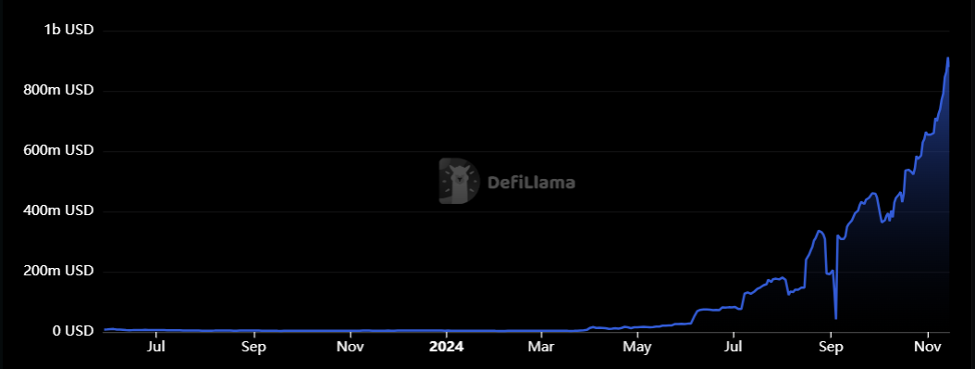
Of all L2 networks, Core has the most advanced technology and can accelerate the adoption of Bitcoin in Web3.
You may wonder why all the rush to build dapps on Bitcoin. Aren’t Solana, Sui, or Aptos fast and cheap networks to build efficient Web3 applications with high throughput? The truth is that there is no blockchain as secure as Bitcoin, as it is backed by a vast network of miners, making it resistant to any potential attacks.
Transposing Bitcoin’s security to Web3 apps brings an unprecedented layer of security while unlocking trillions in BTC value to be used in DeFi.
Why This Matters Now
The emergence of Bitcoin layer 2 networks marks the beginning of a new era for the oldest cryptocurrency and the first application of blockchain. These layer 2s open the door to countless applications beyond just value storage.
With Bitcoin L2s still in their early stages, now is an ideal time for investors and developers to join the Bitcoin Renaissance and engage with a fast-growing ecosystem.
Ordinals protocol and Bitcoin L2 networks are building the infrastructure needed to integrate smart contracts, NFTs, and DeFi capabilities on Bitcoin, promising unprecedented security combined with programmability and flexibility.
As the technology matures, Bitcoin could redefine its role in Web3, offering unmatched security for dapps and driving blockchain adoption for practical use cases.
Hang in there, Bitcoin—your revolution is just starting, and the best is yet to come!