

Copy trading isn’t new. It’s been around since Facebook was just a college network, and smartphones weren’t really smart. And if Google Trends is anything to go by, it’s getting more popular every year.
But something special is happening in the MENA region.
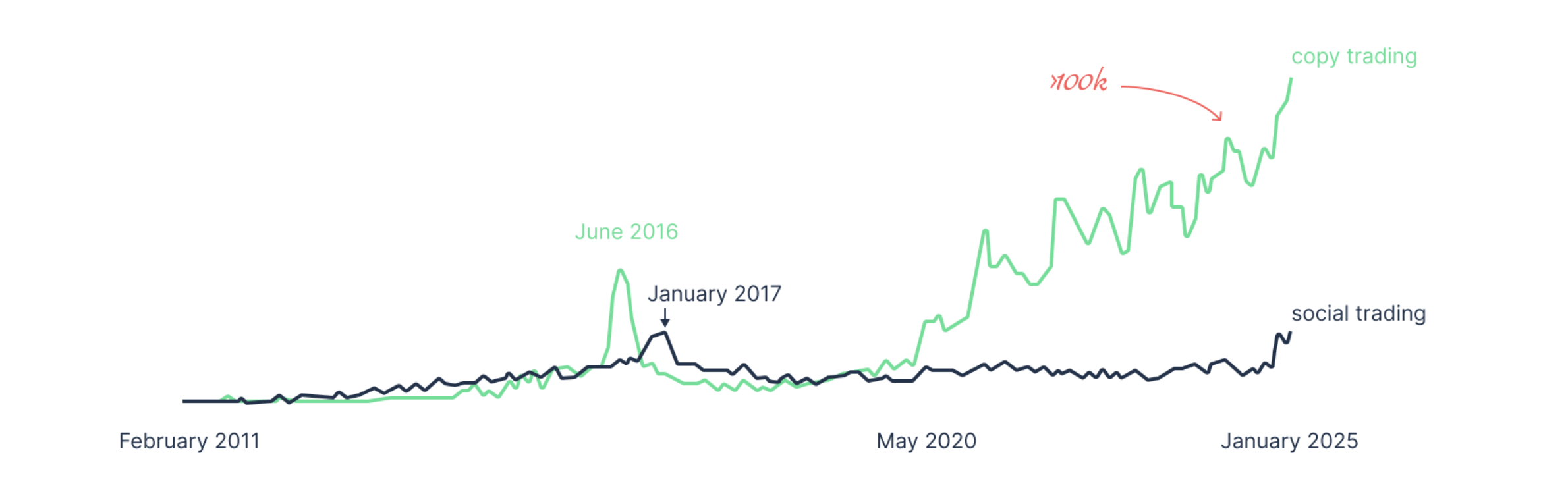
The Middle East and North Africa are seeing a massive rise in copy trading adoption. The numbers corroborate this — the market is expected to grow from $148.88 million in 2021 to $222.68 million by 2028.
But what’s behind this growth?
You have a young, digitally connected population wanting to enter financial markets. There is increased smartphone penetration, better internet connectivity, and growing financial literacy.
So, if you’re a broker, this is an opportunity and a challenge.
How do you tap into this growing market? What do MENA traders want? And most importantly how do you build a solution that meets their needs?
The good news is, you don’t need to guess. The answers are in the details of what’s driving this growth, and that’s what we’re going to explore.
What’s Behind This Growth?
Across these markets — the UAE, Saudi Arabia, South Africa, and the rest of the Middle East and Africa — the MENA region’s digital transformation sets the stage for copy trading’s explosive growth. Today, most people access the internet through mobile devices, with Bahrain leading at 97% penetration and UAE close behind at 96% in 2023.
Paired with high-speed internet access across major MENA markets, these numbers explain why more people than ever can access trading platforms right from their phones.
Growth factors of online trading in MENA
| Supply | Demand |
|
|
But technology alone isn’t driving this boom. The regulatory landscape has matured significantly, especially in key financial hubs like Dubai and Abu Dhabi. The Dubai Financial Services Authority projects the online trading industry to reach $1 trillion by 2025. The improved oversight has also created a more trusted environment where traders feel more secure exploring copy trading options.
This isn’t surprising considering the region’s broader push toward financial innovation, from fintech adoption to digital banking solutions. The establishment of free zones like the Dubai International Financial Centre (DIFC) has also provided business-friendly conditions with clear guidelines and protections for traders.
As trading awareness grows through educational initiatives and increased platform accessibility, copy trading emerges as a cost-effective approach for new investors.
Stay ahead with Brokeree’s live webinar: Debunking the “End of Copy Trading” Narrative. Join our experts, Tatiana and Victor, as they explore the growing demand for copy trading services across regions. Discover key statistics, actionable insights, and practical tips to successfully launch or enhance your copy trading offerings. Don’t miss this opportunity to future-proof your strategy!
Understanding MENA’s Copy Traders
Major players recognize the region’s potential. eToro made a significant move in 2023 by securing a Financial Services Permission from Abu Dhabi Global Market to operate as a broker in the UAE. They now offer traders securities, derivatives, and crypto assets. Axi, NinjaTrader, and Interactive Brokers are other active players.
What’s particularly interesting is how regional trends align with global patterns. While worldwide data shows one in six retail investors engaging in copy trading, the MENA region stands out, with its younger demographic taking the lead. In fact, 44% of all copy traders are Gen Z, and African users show the highest engagement rates.
Think about that — nearly half of all copy traders are people who grew up with smartphones in their hands. They don’t want complicated platforms or lengthy tutorials. They want something as simple as following their favorite influencer on social media.
Islamic Finance Considerations
Trading in MENA isn’t just about making money. It’s about making money the right way.
Trading itself is halal (permissible) in Islam as long as it follows Islamic principles. The key issue is avoiding riba (usury) — excessive interest charges that make trading haram (forbidden). In the context of copy trading, it means careful attention to how trades are executed and what instruments are being traded.
Platform providers face an important challenge. They need to make their copy trading solutions Shariah-compliant while still competitive. That means choosing the right trading instruments, transparent fees, and clear documentation of how trades are executed.
For traders, the impact is direct. They should know whether a strategy they’re copying follows halal principles. Are there overnight swap fees? What instruments are being traded? These aren’t just technical questions — they’re essential for traders who want to stay compliant with their religious beliefs.
This is why the debate continues among Islamic scholars. Copy trading’s compliance with Shariah law isn’t a simple yes or no answer. It depends on many factors, and as a broker or platform provider, you need to understand these subtleties to serve this market.
Copying Trades Between Different Platforms
Modern traders demand platform choice. A professional trader might use MetaTrader 5 for advanced charting, while a beginner prefers MetaTrader 4’s simpler interface. Each platform serves different trading styles and needs.
Consider a scenario where your top-performing trader uses MT5, but most of your clients trade on MT4 or cTrader. Without cross-platform capabilities, you lose significant copy trading opportunities.
Brokeree’s cross-platform Social Trading is one of the most popular solutions that addresses this challenge. Here’s how:
- For brokers, it offers granular control, which is crucial in a diverse market like MENA. You can set different trading conditions based on account types, whether they’re pro traders, demo accounts, or high-risk strategies.
- For traders, it’s about choice and risk management. They can choose different copying modes based on equity, free margin, or multiplication copying. Proportional copying is also very useful: traders can follow strategies from larger accounts while keeping their risk levels manageable.
But here’s what makes it truly special: cross-platform performance. A signal provider using cTrader can attract followers from MT4 and MT5 servers. Both admins and clients can switch between platforms without logging out. This makes it easier to react to market changes. Plus, with the Social Trading mobile app, traders can access expert strategies on the go, a must-have in a region with high smartphone usage.
Get in touch with our experts to learn more about Social Trading, or attend the upcoming webinar to gain more insights into copy trading.